The numbers, side by side
| Specification | 20ft standard | 40ft standard |
|---|---|---|
| Outside length | 20 ft (6.06 m) | 40 ft (12.19 m) |
| Outside width | 8 ft (2.44 m) | 8 ft (2.44 m) |
| Outside height | 8 ft 6 in (2.59 m) | 8 ft 6 in (2.59 m) |
| Inside length | About 19 ft 4 in (5.90 m) | About 39 ft 5 in (12.03 m) |
| Inside width and height | About 7 ft 8 in × 7 ft 9 in | About 7 ft 8 in × 7 ft 9 in |
| Floor area | About 148 sq ft | About 303 sq ft |
| Internal volume | About 1,172 cu ft (33.2 m³) | About 2,389 cu ft (67.7 m³) |
| Empty weight | About 4,850 lb (2,200 kg) | About 8,270 lb (3,750 kg) |
| Door opening | About 7 ft 8 in wide × 7 ft 5 in high | About 7 ft 8 in wide × 7 ft 5 in high |
| What it fits through | A single residential driveway with a clear run | A wider gate and a much longer clear run |
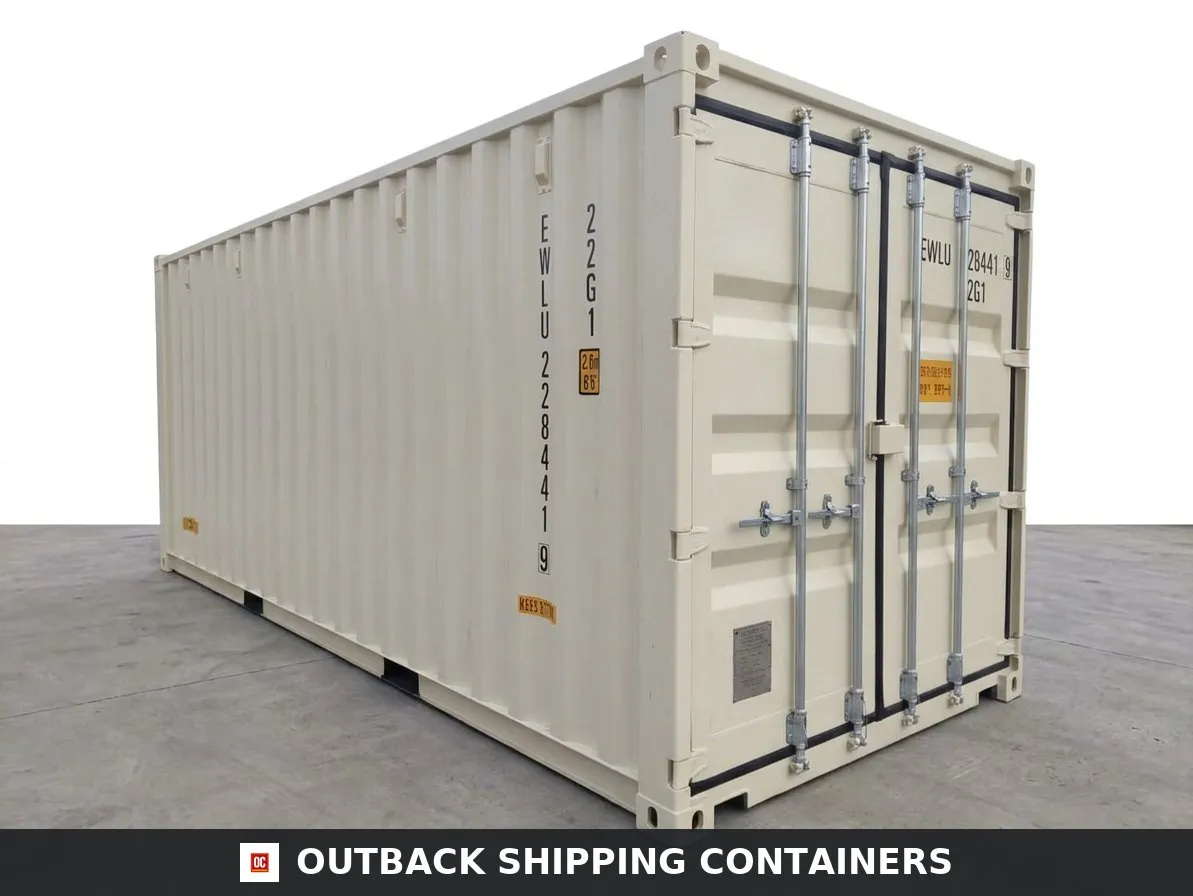
The door opening is identical on both. A 40ft box does not need a wider gate than a 20ft one — it needs a longer way in, and a driver with room to straighten the truck before setting it down.
Floor space: just over double, and not double the price
You pay more for a 40ft than a 20ft, but not twice as much, so the 40ft is usually the cheaper storage per square foot. That headline saving is only real if the truck can actually reach your pad. When it cannot, the delivery becomes a crane job or a second smaller unit, and the saving disappears. Current units for both sizes are in the shipping container range, and we confirm price and freight after reviewing the order.
Where the 40ft catches people out: delivery
Both sizes are set down on site by a tilt-bed truck. The bed has to tip, the container slides off, and the truck pulls forward out from under it — that is the part that needs room.
- A 20ft drop usually wants about 60 feet of straight, level run in front of the pad.
- A 40ft drop wants around 100 feet, because the truck has to stop further back and the bed has to clear the full length of the box.
- Clear height matters as much as length. Overhead service lines, low branches and the edge of a barn roof are the usual stoppers. Treat anything under about 14 feet of clearance as a problem to solve before ordering.
- In Maine, plan the delivery for the season you are in. Snowbanks narrow a driveway by several feet between November and April, and spring frost leaves ground soft enough that a loaded truck will rut it or sink. A winter or mud-season drop may need the pad built up beforehand.
- Turning room at the road matters. A tight cul-de-sac, a blind corner or a right angle between two stone walls is easier with a 20ft on the truck.
If the approach is doubtful, send us the address and a few photos of the gate, the turn and the lines overhead. Freight is quoted per order after that review — see delivery for how it works.
What each size gets used for around here
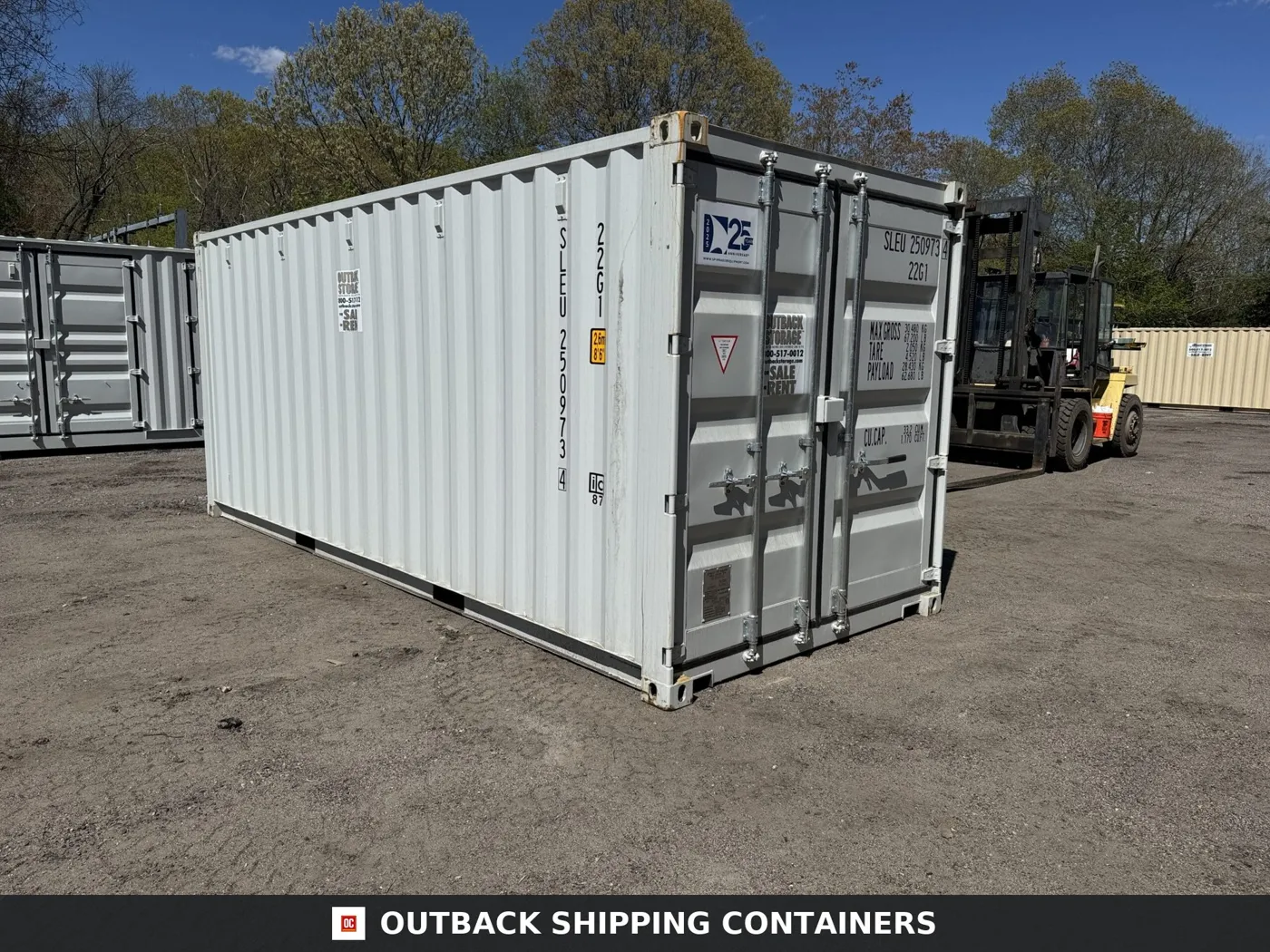
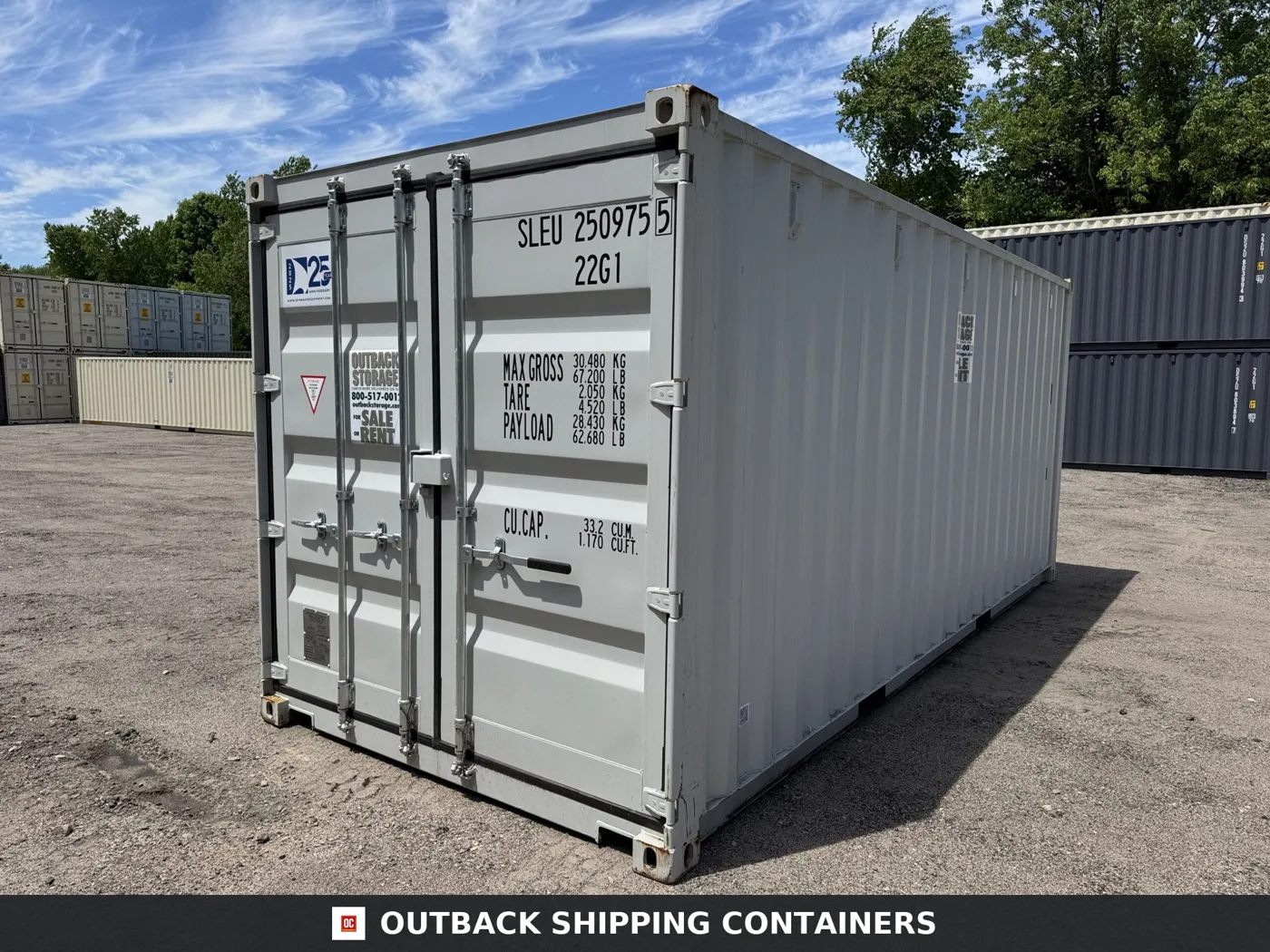
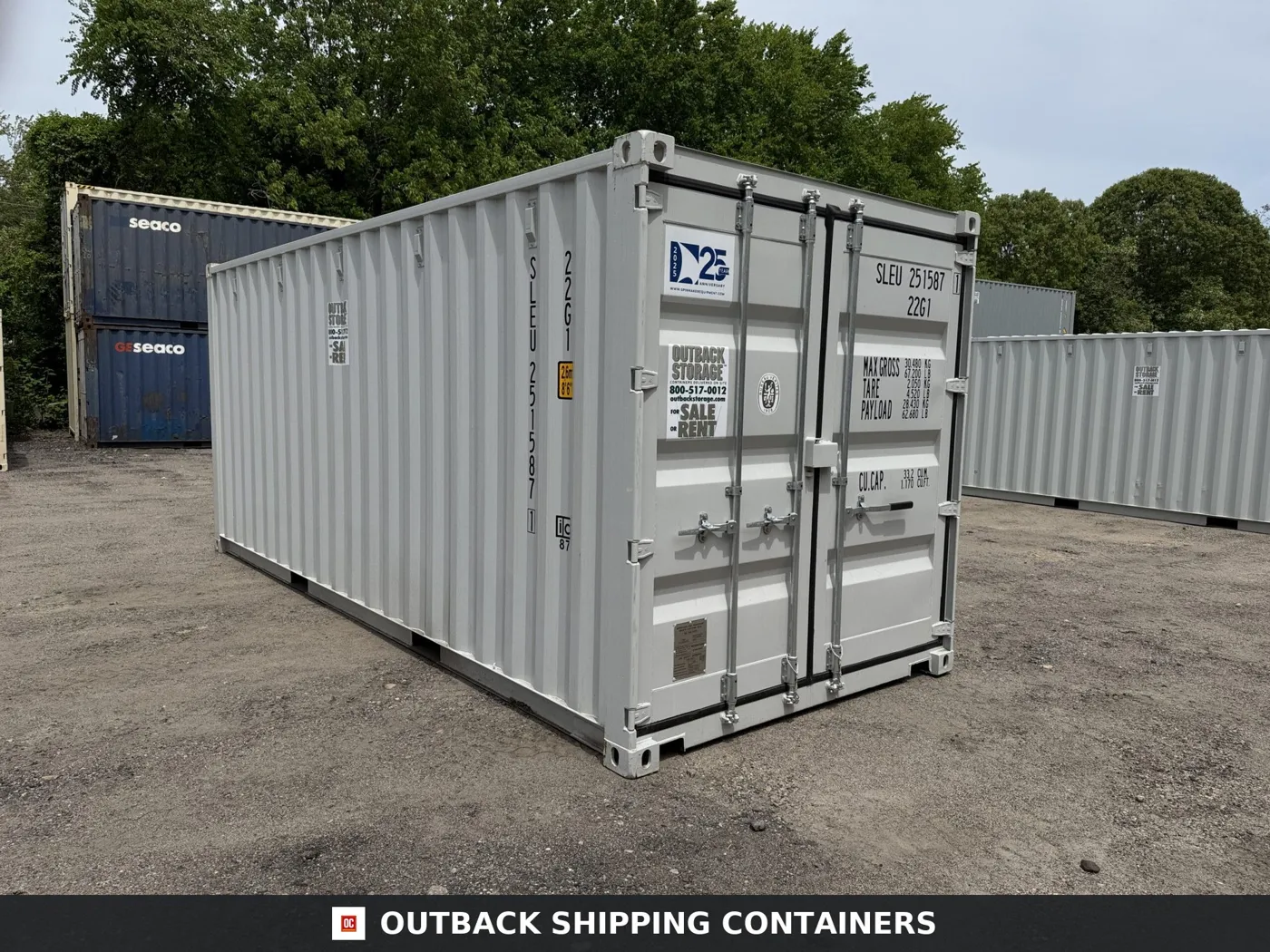
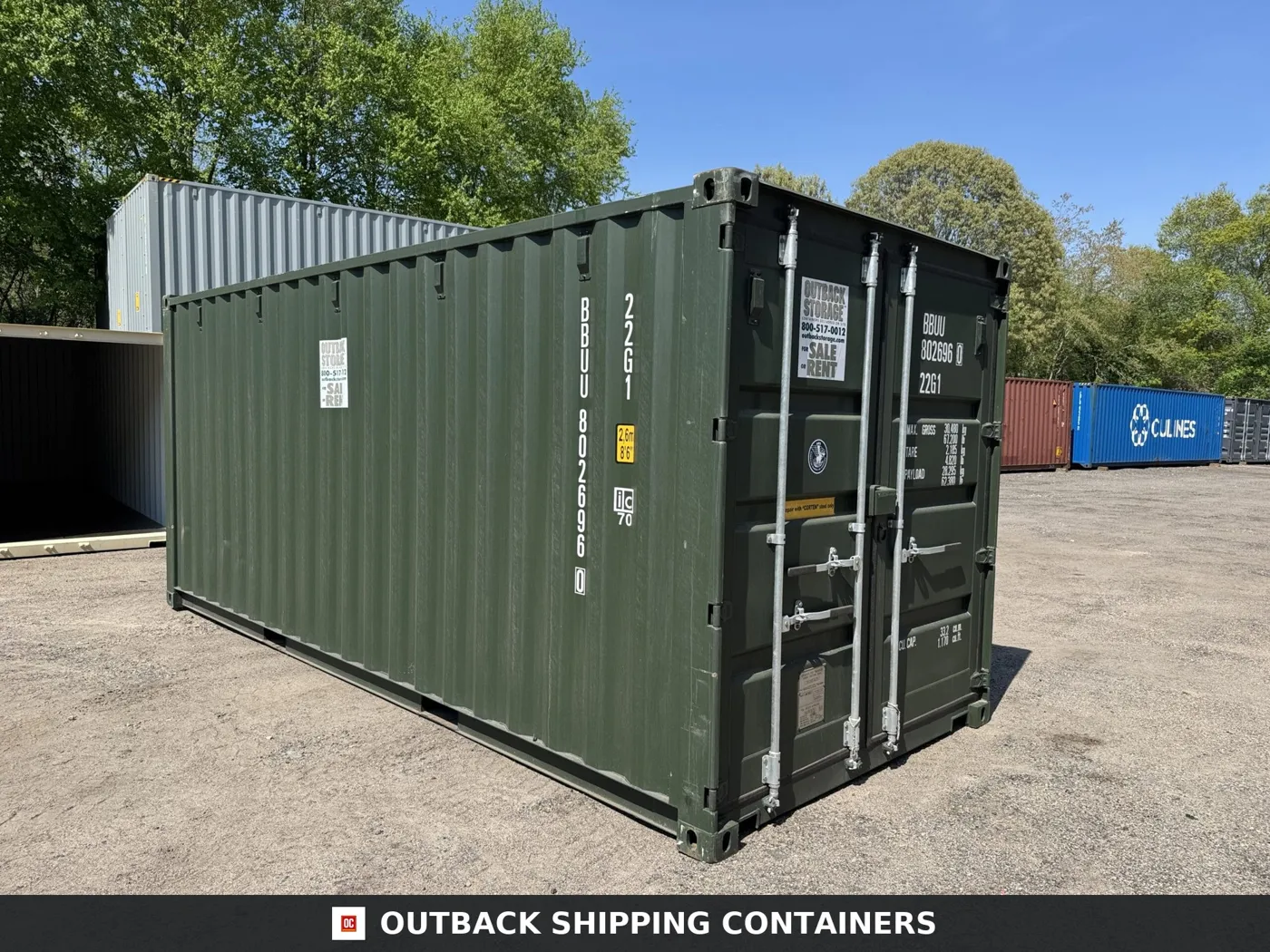
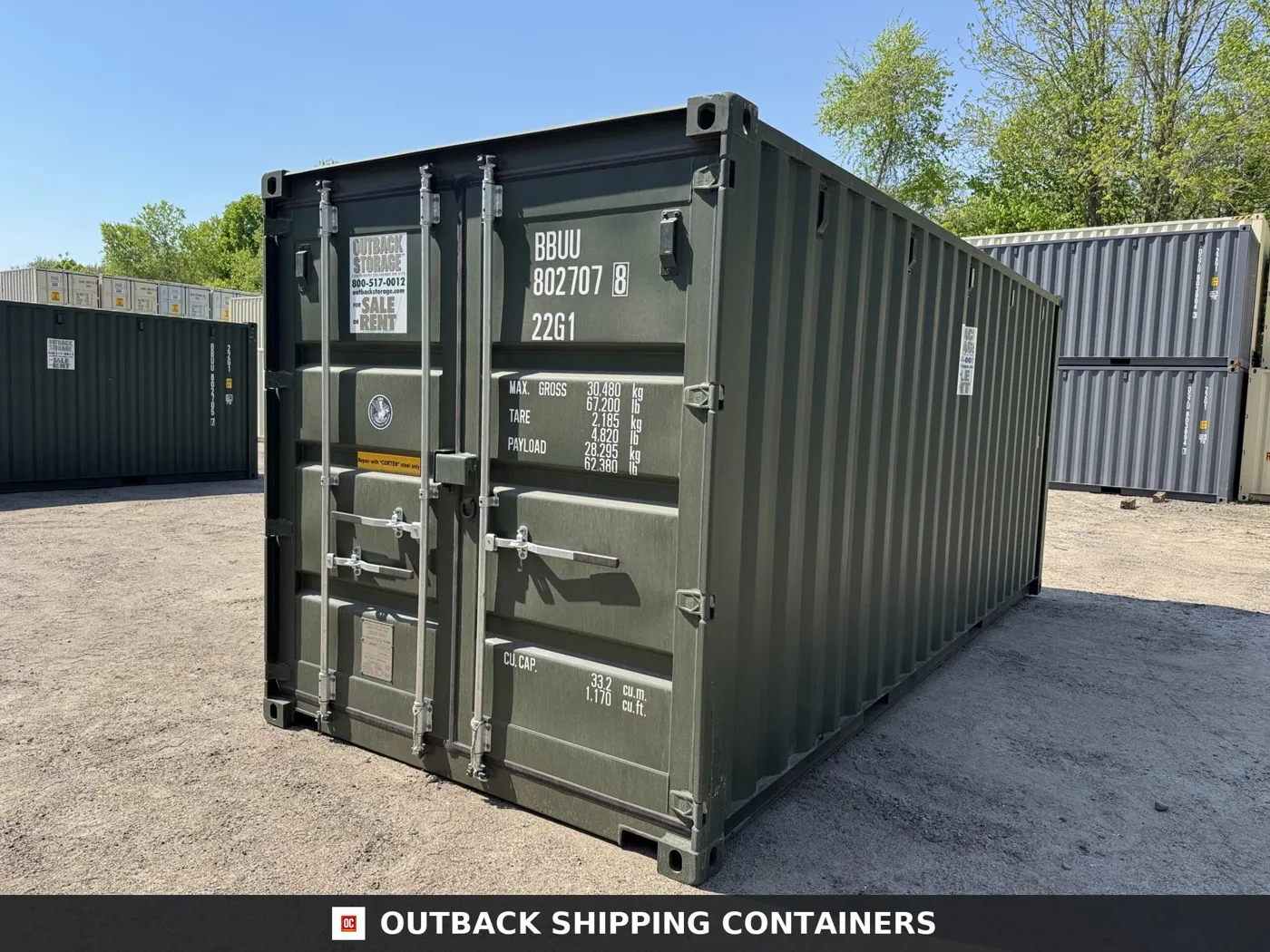
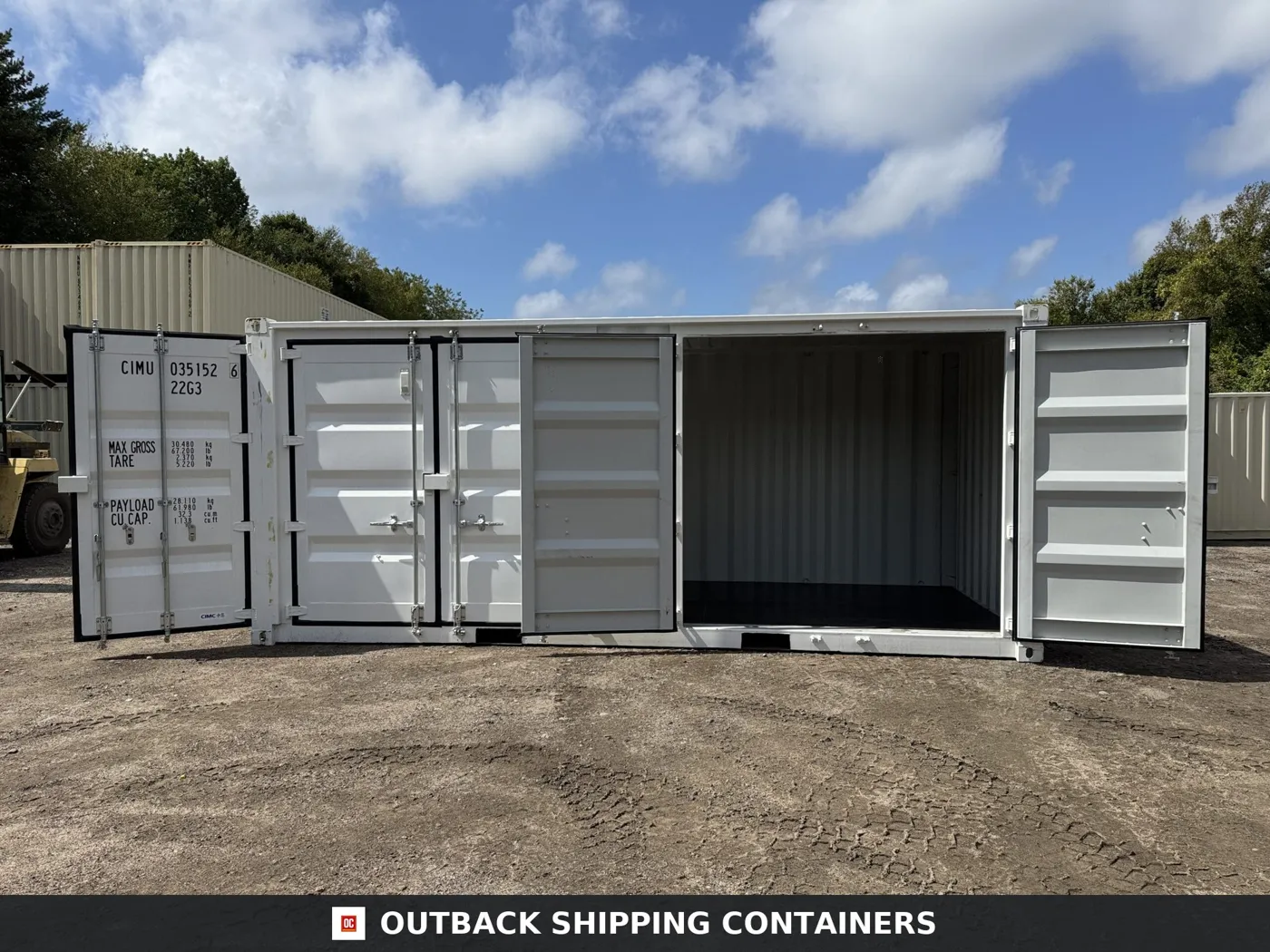
The 20ft is the working container. Crew tool and material storage on a job site, a contractor's yard, a farm's feed and fencing supplies, a back lot behind a shop. It suits camps and shore properties where the driveway is a narrow gravel run between trees, and it is the size most conversions start from: a single-room container office, a sauna room, a container pool, a retail kiosk.
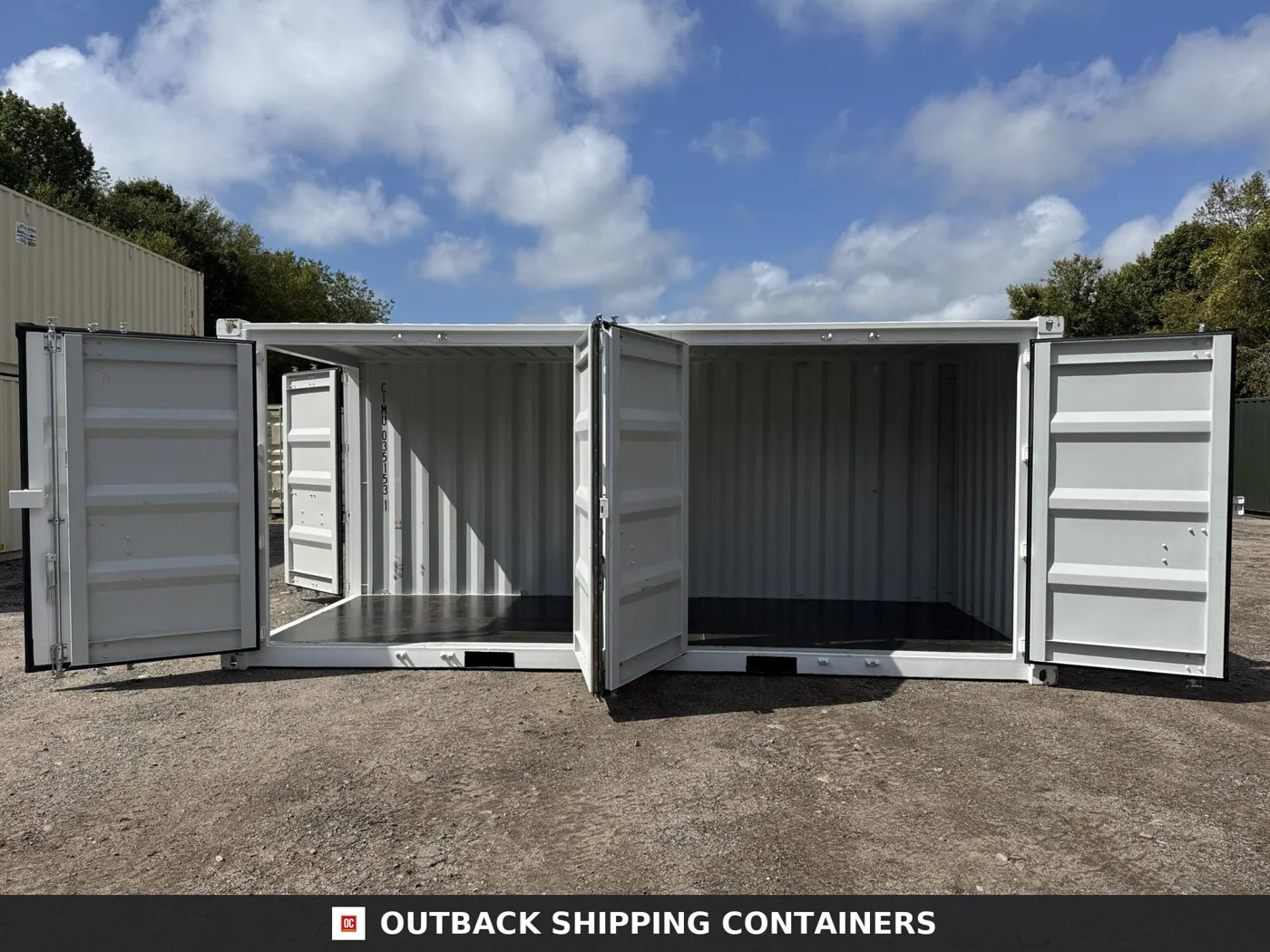
The 40ft is the volume container. Bulk storage where the load is bulky rather than heavy — hay, packaging, seasonal stock, pallets of goods, event gear. Multi-bay self-storage builds, container homes and larger offices are usually built from 40ft modules because a two or three room layout needs the floor length. It is also the cheapest floor space you can buy in steel.
Weight: the 40ft does not carry twice as much
This surprises buyers. The 40ft has roughly twice the volume but only a little more payload, and in some ratings less than a 20ft, because the longer box bends more and its rating is set to suit. If what you are storing is dense — steel, tile, bagged concrete, machinery — a 20ft will take nearly the load in a shorter footprint. If it is bulky and light, the 40ft wins on volume every time.
Choose the 20ft if…
- your approach is short, narrow, unpaved, sloped, or hemmed in by trees, walls or wires
- you want it on a back lot, a camp road or a side yard where a truck can barely turn
- your load is heavy and dense rather than bulky
- you may move it again — a 20ft can be handled with smaller equipment and repositioned on site
- it is a single-room conversion, and about 148 square feet of floor is enough
- you need it sooner, since a 20ft drop is easier to fit into a hauler's schedule
Choose the 40ft if…
- you have a straight, level run of about 100 feet, a gate the truck clears, and 14 feet of clear height along the route
- you are storing volume, not weight — hay, stock, packaging, equipment that stacks
- you would fill a 20ft within a year; the second container costs more to deliver than the extra length costs to buy
- you are building a home, a multi-room office or a self-storage bay layout
- you want the lowest cost per square foot of covered storage
Before you order either size
- Peg out the footprint with string or paint, doors included. Doors need room to swing, and you want to walk around the long sides.
- Walk the whole delivery route, not just the last 30 feet. Gate width, gate posts, the turn off the road and any overhead line on the way in.
- Check the town's rules before you buy. Setbacks, permits and whether an occupied container needs approval are local questions — our permits and certifications page covers what tends to come up in Maine.
- Build a level base. Compacted gravel or piers, not bare soil, and not a slope the container will rack on. See site preparation.
- Inspect it while the driver is still there. Damage claims are accepted within 24 hours of delivery, and a note and photos at the drop are worth more than one taken the next day.
The short version
If the truck can get in, the 40ft gives you double the storage for well under double the money. If the approach is tight, a 20ft on site today beats a 40ft that cannot be delivered — and two 20fts placed side by side is a legitimate answer for a yard that cannot take a long box. If you are unsure which one your site can take, send us the address and a photo of the approach and we will tell you before you buy.