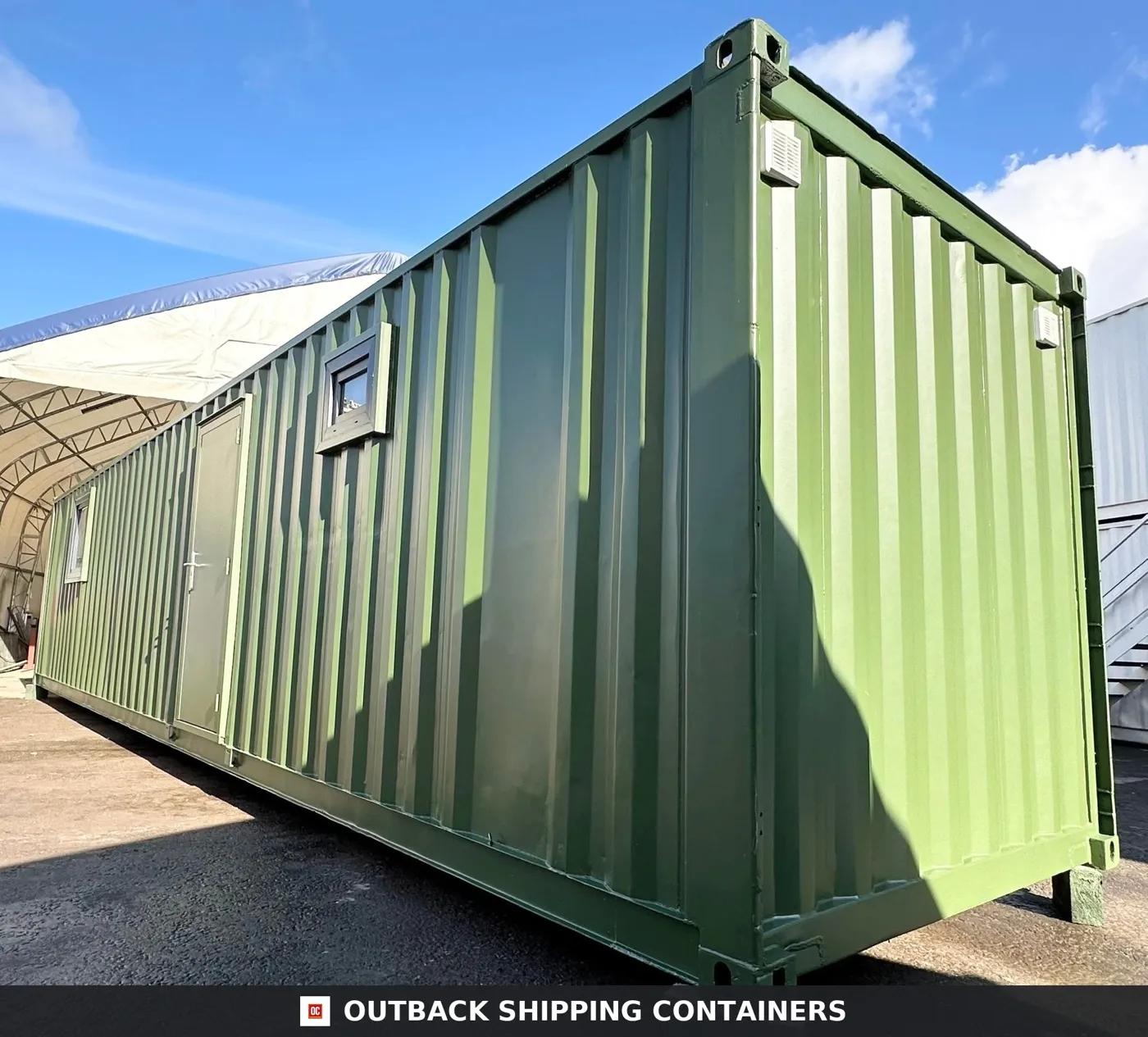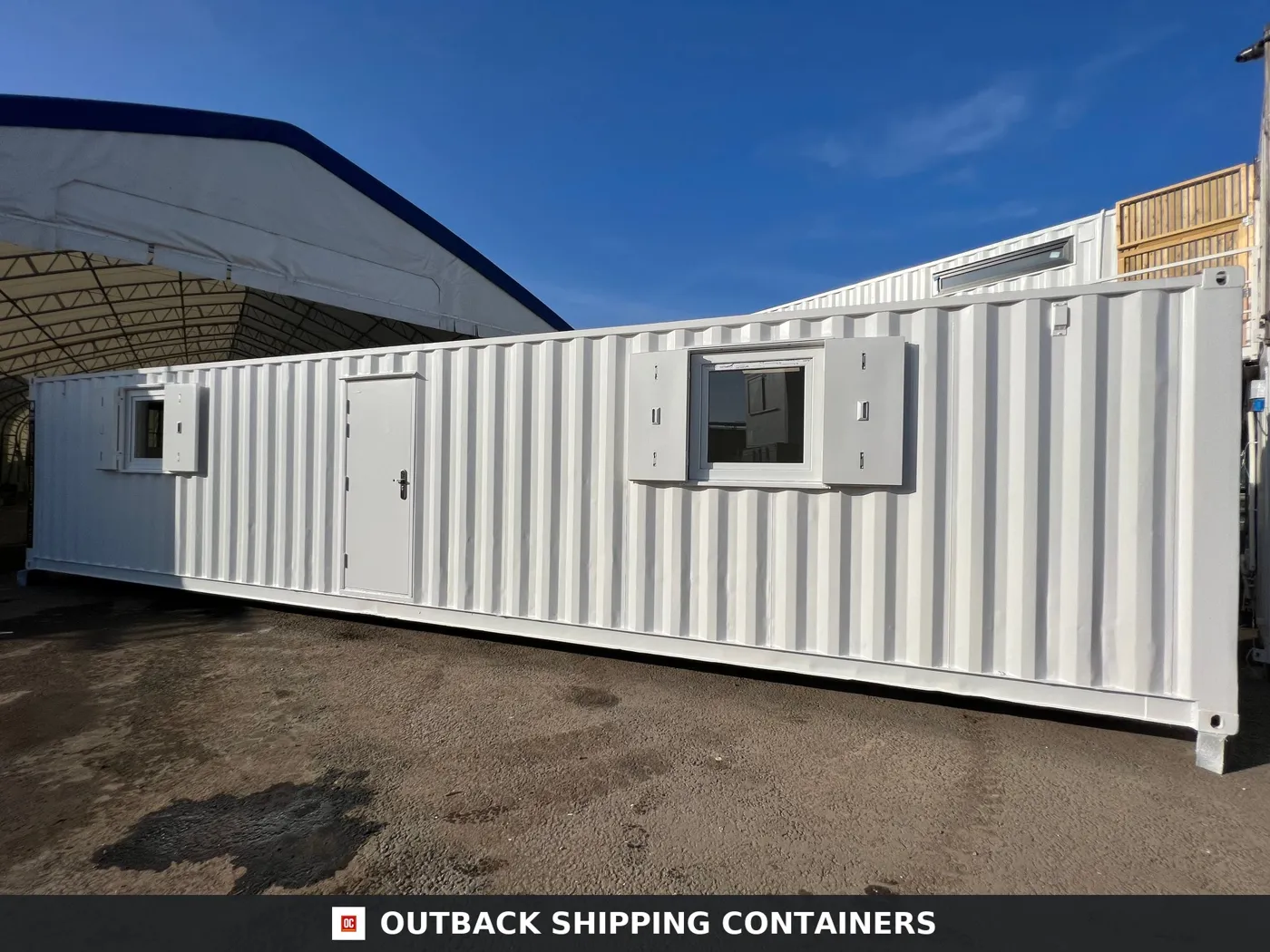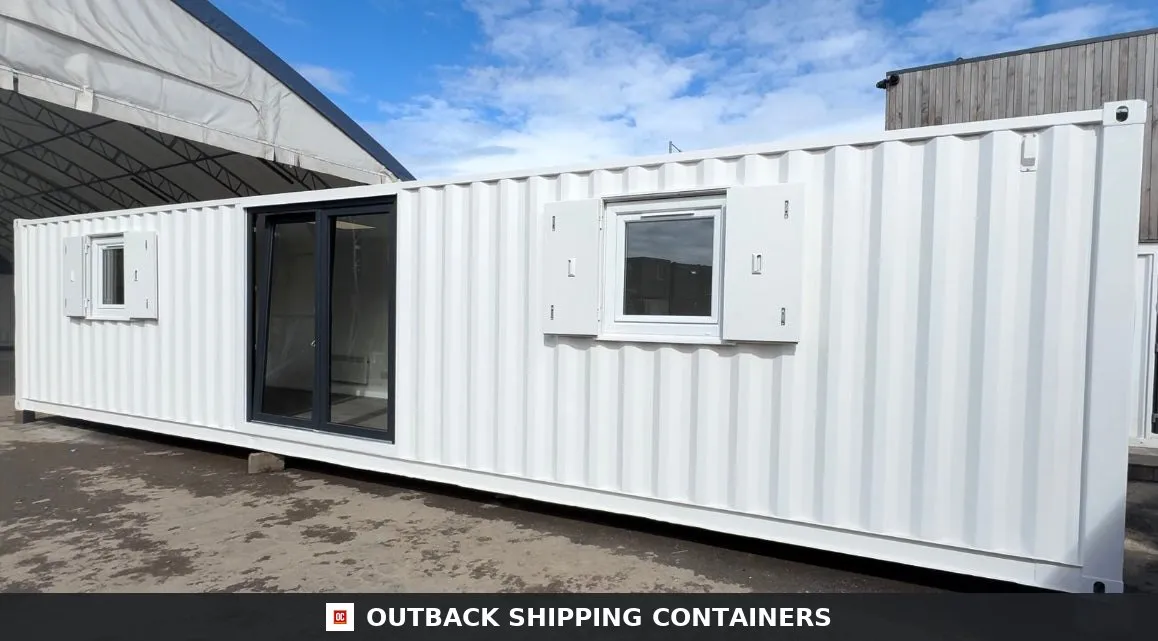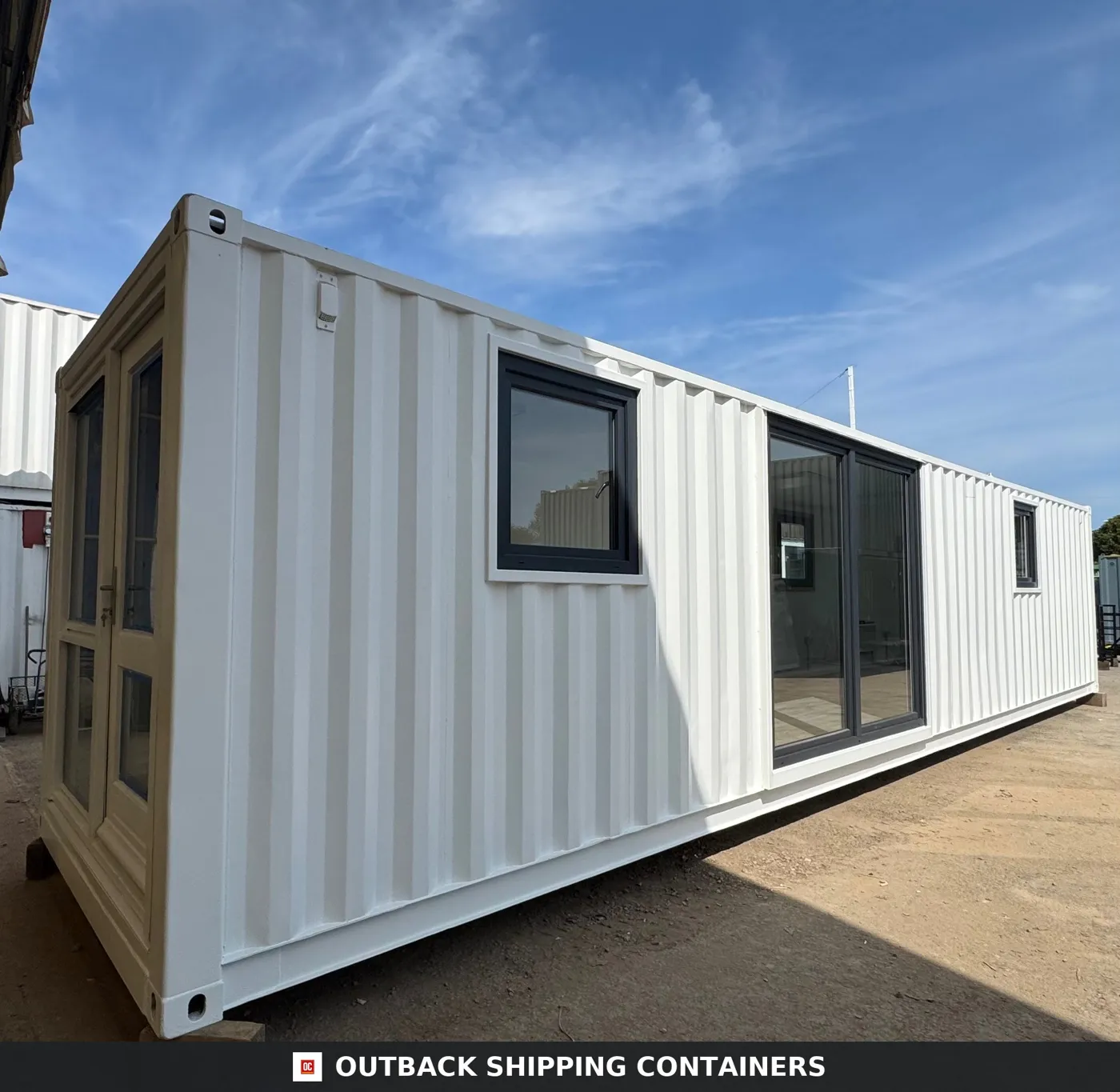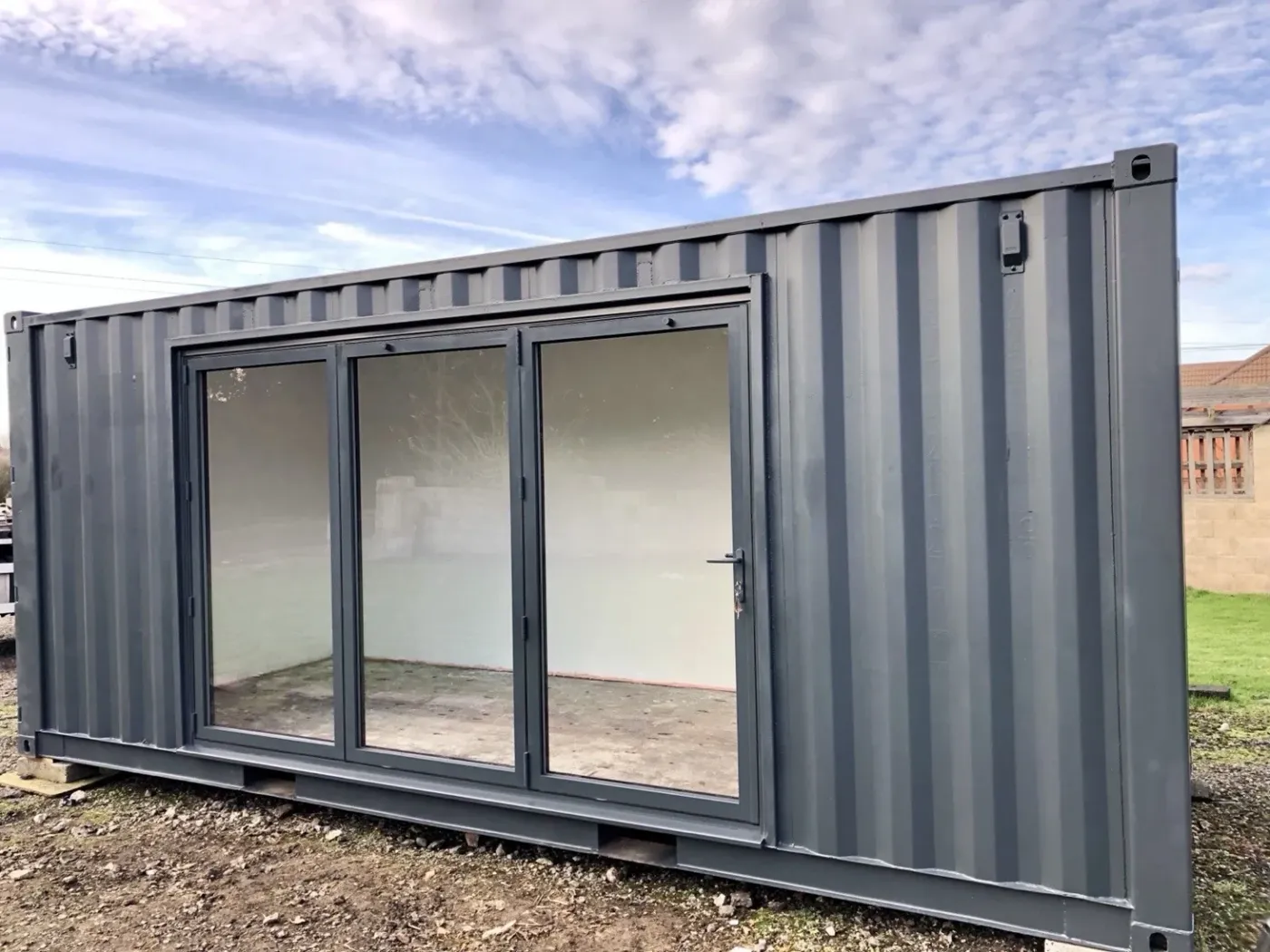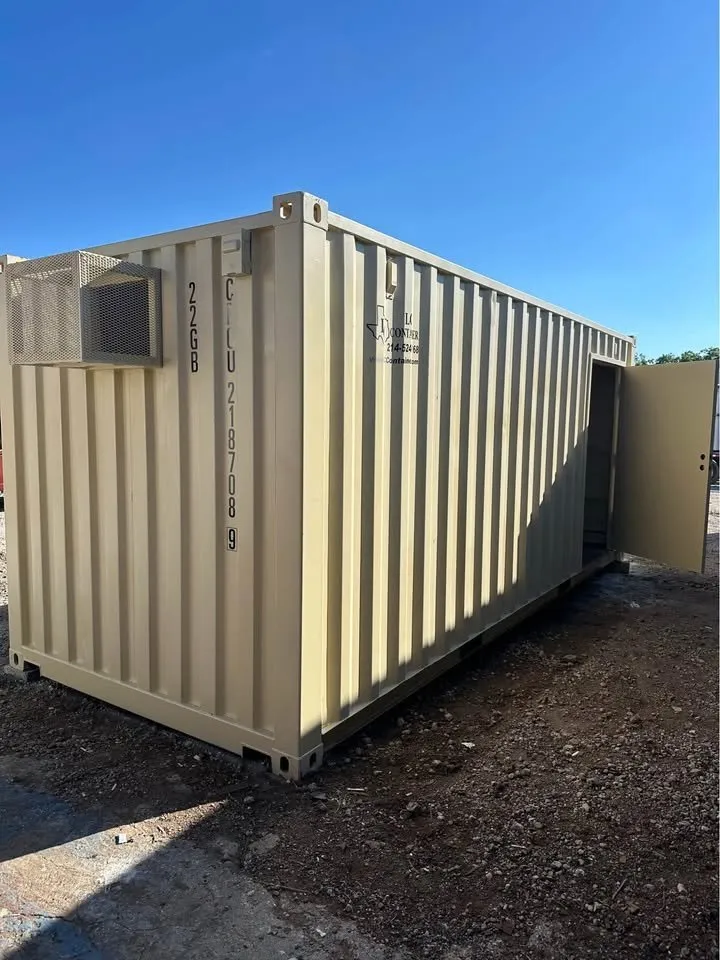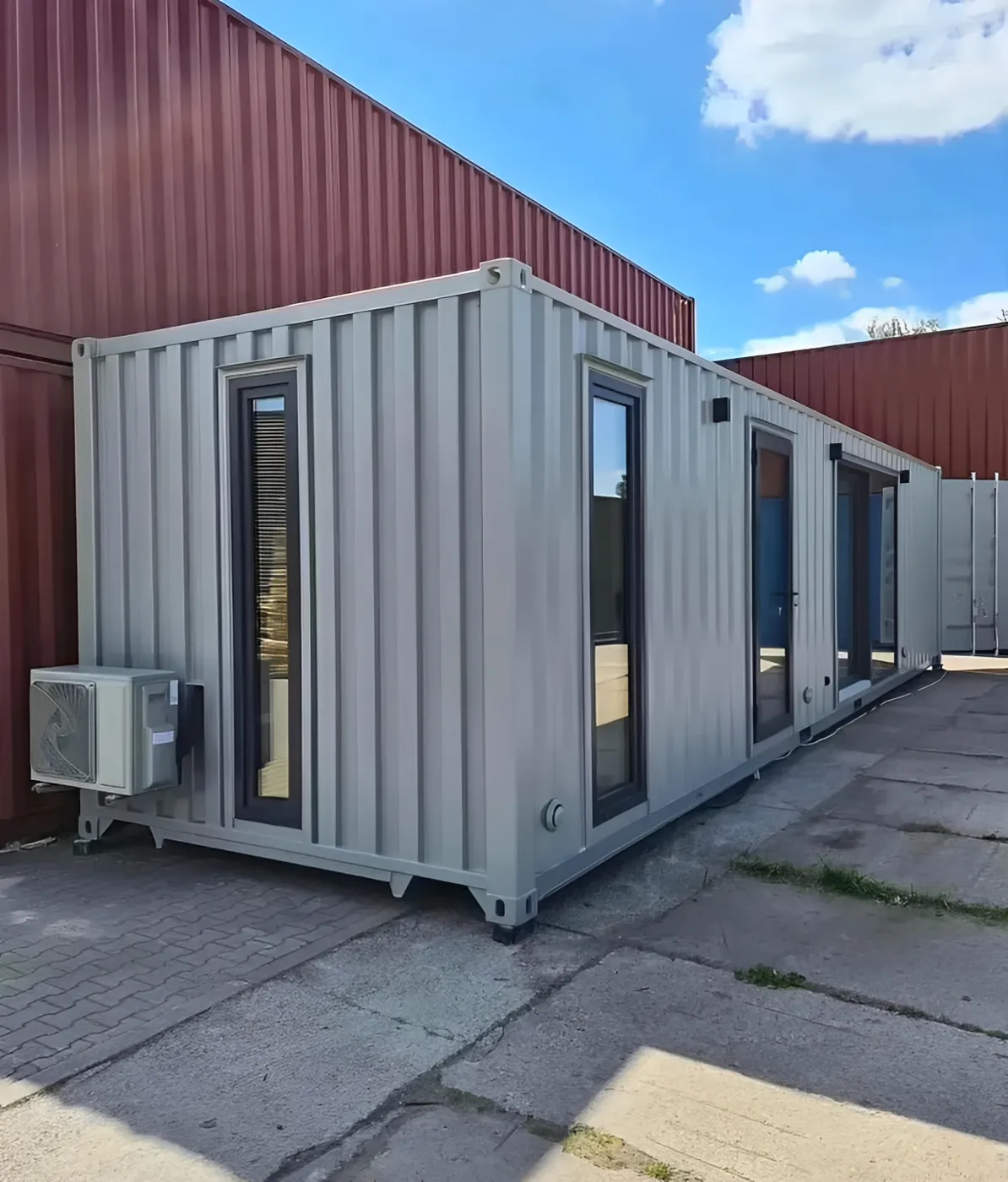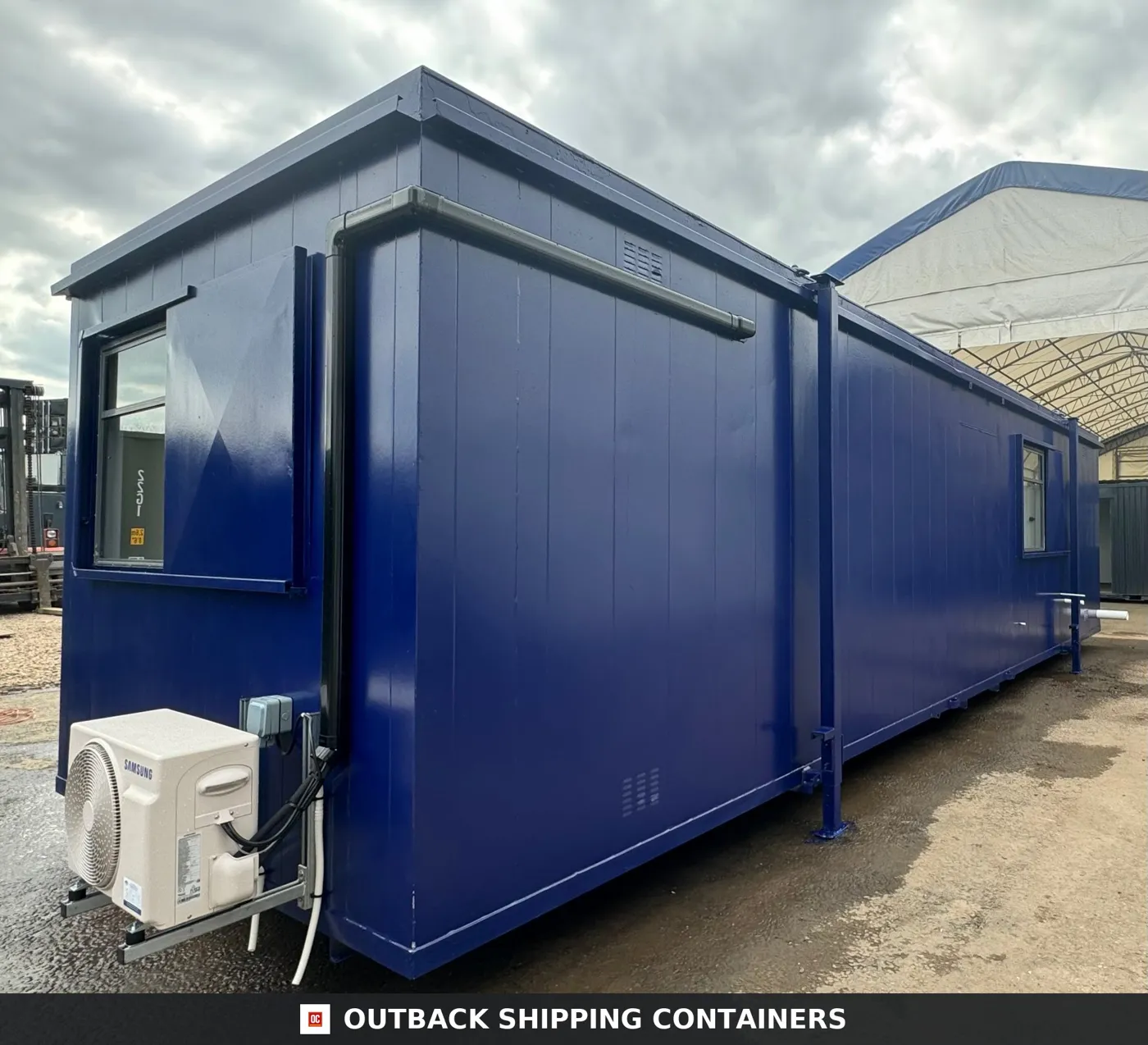
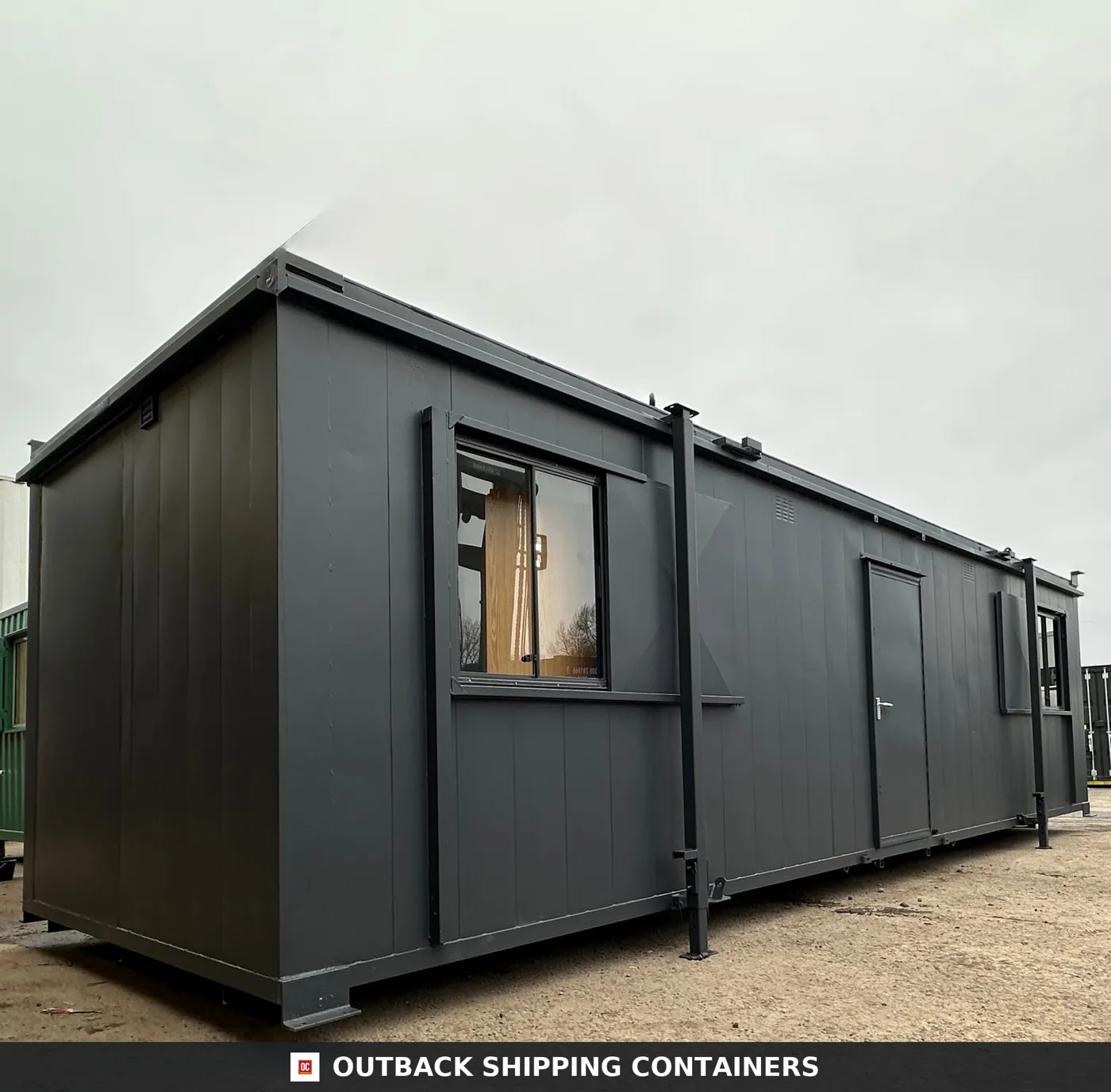
 CUSTOM — 32 x 10 ft Cabin — Office/Canteen — Kitchenette — 1+1 WC/Wash Room — No 718 — tap to view
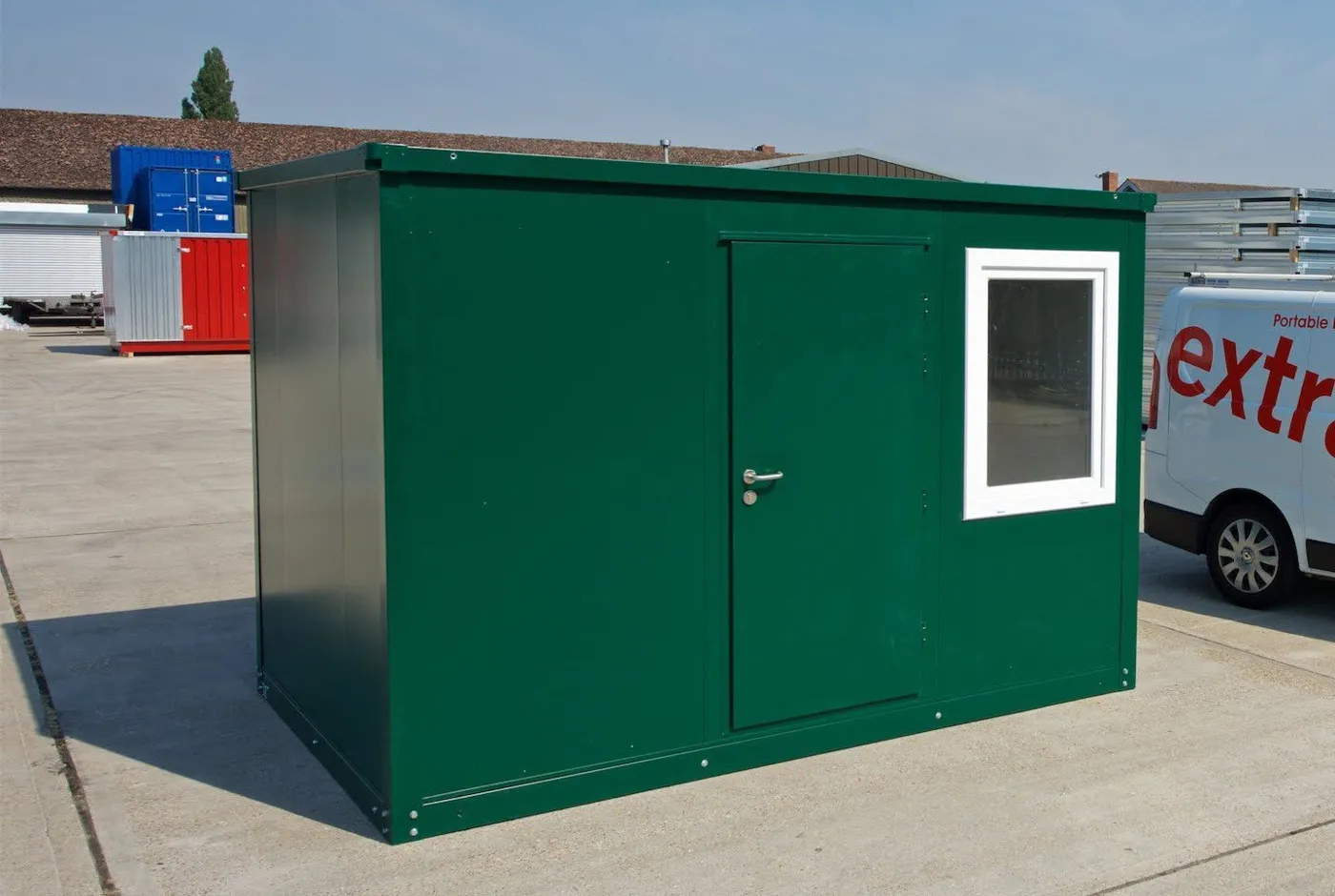 Flat Pack Offices For Sale – Compact, Customizable Ready to Work! — tap to view
Decide what the office has to do before you pick a size
On most sites the container does two or three jobs at once: a desk and a printer for the superintendent, a place to spread drawings, a locked cabinet for paperwork, and somewhere the crew can eat out of the weather. Write that list down before you look at units, because it decides the length.
- 10 ft — one desk, a chair, a filing cabinet. Right for a foreman or a gate office where one person sits at a time. Small units come as jackleg cabins or ground-level office containers, often with a single heater and a socket or two, which covers a laptop, a charger and a light.
- 20 ft open plan — two to four desks, a plan table, a coffee maker. The standard site office, and the easiest size to reuse or resell when the job ends.
- 20 ft combo office and storage — partition at one end, dry lockable storage at the other. Keeps drawings and small tools out of the truck.
- Expandable or multi-bay — when you need a meeting room. An expandable 20 ft opens out to roughly 385 sq ft, which is a conference table and chairs, at the cost of more rigging work on every move.
If the site also needs a toilet block or a drying room, plan it at the same time. Two units moved together is one delivery. Moved a month apart, it is two.
Site it where the truck can actually reach it
The container is the easy part. The delivery truck is the constraint. Walk the route the driver will take before you clear a spot: gate width, turning circle, overhead wires and branches, and whether the ground is firm enough for a loaded tractor and trailer in March. Fresh fill, a lawn in mud season and a gravel drive that has not been graded in years all behave the same way under a loaded truck.
- Level and drained. Set the unit on compacted gravel or four concrete pads at the corners, with a slight fall away from the door side. Standing water at the base is what rusts a container floor from underneath.
- Bear on the corners. A 20 ft office weighs in around 5,000 lb, and it is built to carry that on the four corner castings, not across the middle of the floor. Block the corners, and block them together so they cannot settle apart.
- Frost and mud. In Maine, a pad set in October is not the same pad in April. Assume movement and re-check the level after the thaw, particularly with a finished interior, where a racked frame shows up first as a door that drags.
- Room to work. Leave space at the door end for steps or a ramp, and enough room on one side for the driver to swing the unit. Three clear feet on the working sides is the minimum that stays workable once tools and pallets pile up.
- Keep the door out of the weather. A door facing the prevailing wind sits under a drift most of February. Face it the other way if the site allows.
More on grades, pads and access is on the site preparation page.
Power: get the feeder right, and let an electrician make the joint
Most site offices run on a single-phase feed, commonly 50 to 60 amps at 240 volts, split into 120-volt circuits inside for sockets and lighting, with heat and air conditioning on their own. A small mobile office with a 2,000-watt baseboard heater and a 6,000 BTU air conditioner is not a heavy load, but it is a load that runs all night, and that is where the trouble starts.
- Size the feed to the heat. Electric resistance heat is the hungriest thing in the room. If you are running off a generator, size it on startup draw rather than on the nameplate of the lights.
- One proper feeder, not a chain of cords. Cords run through a doorway and across a yard are how site offices trip breakers, and how a heater gets blamed for a fire it did not start.
- Have the hookup made properly. An electrician should land the feeder in a disconnect or a panel, bond the unit and check the ground. The walls are steel. A fault with no bonding path is a shock waiting for someone in wet boots.
- Plan the generator now. If there is no utility service yet, decide where it sits, how it is fuelled, and how the cable reaches the unit without being driven over.
The spec sheet on each unit under container offices lists what is already fitted — service size, heater, air conditioning, lighting and whether there is a distribution board or just a socket or two.
Cold weather: insulation, condensation and the door
A bare steel box is a condenser in a Maine winter. People breathe, boots drip, a heater runs, and the moisture lands on the coldest surface — usually the underside of the roof and the tops of the walls. The result is rust streaks and a room that never quite dries out.
- Insulated, not just heated. A finished office needs insulation in the walls and ceiling and a lining over it — spray foam or batt, then a panel. Heat without insulation only moves the condensation around.
- Ventilate a little, always. A cracked vent or a small extract fan through the working day costs a few dollars of heat and prevents most of the moisture problem.
- Mind the floor and the door. A vinyl plank floor over a steel frame is fine in boots; bare steel or damp plywood is not. An insulated personnel door with a working closer beats a cargo door left on a chain in February.
- No water where it can freeze. If the unit has a sink or a plumbed toilet, the supply and waste lines need heat trace, insulation and a drain-down. For a winter job, a dry unit with bottled water and a separate toilet block is often the simpler answer.
The journal has a longer piece on cold-climate condensation; the short version is that insulation and ventilation are one system and buying one without the other does not work.
Security on a site that empties at five
An unattended site office is a known target, because everyone in the trade knows what is inside one.
- Lock the door properly. A lockbox or puck lock over the door bar, not a padlock through a hasp that can be cut. Anti-vandal units with multi-point locking doors and barred or shuttered windows are worth the upcharge on a site without a fence.
- Take the valuables with you. Laptops, fuel cards, tablets and the good drill go in the truck at night. The unit is a room, not a safe.
- Light the door side. A dusk-to-dawn light on the unit or a pole nearby does more than a warning sign.
- Control the keys. One keyholder, a spare in the site box. A new lock at the end of the job costs far less than a missing cabinet of drawings.
- Split the storage. On a combo unit, a separately keyed partition keeps materials and tools out of the office traffic, so the office door is not propped all day.
Moving it to the next job
Half the value of a container office is that it goes to the next site. Half the damage happens on the way.
- Empty it first. Everything comes out, including the wall cabinet and the water cooler. Loose loads become wrecking balls over a pothole.
- Close and secure the doors. Swing the doors shut, drop the locking bars and pin them. A door that swings open in transit takes the frame with it.
- Lift from the corner castings. A spreader or slings on the four top corners, at the right angle, with a tag line. Never lift through a door opening or under a fitted lining.
- Match the machine to the unit. A 20 ft office is around 5,000 lb before furniture; that is a big forklift on level ground, not a small one on gravel. Where forklift pockets are fitted they help, but the ground still has to hold.
- A boom truck is kindest to a finished interior. A tilt-bed or roll-off will land a bare container, but a fitted office takes the shock through the floor and the partitions.
- Block it on the deck. Timber under the corners, strapped, and the unit checked by the driver before the truck moves.
- Book the move before the job ends. Freight is arranged per order and quoted after we look at the address, so a move planned a week out is cheaper and calmer than one planned on the last morning.
Delivery covers how freight is quoted and what the driver needs from your site.
Before the unit arrives
- Pad or blocking set, level, drained, corners bearing.
- Access route walked at truck width, wires and branches checked.
- Power source decided and the feeder sized; electrician booked.
- Where the steps or ramp will land, and the door swing.
- Snow removal plan for the door side.
- Someone on site at delivery with a machine, or a rigging plan if the unit needs a crane.
- Town requirements checked — see permits and certifications.
Permits and code
Towns in Maine treat a container on a job site differently depending on whether it is storage or occupied, how long it stays and what the site is zoned for. The code enforcement officer is the person who decides, and a two-minute call before you order saves a bad week later. Office use, plumbing, electrical inspection and setbacks are all local questions, not container questions.
If the office is part of a bigger plan — a site compound, a workshop with power and water, something that will stay up for years — say so when you enquire. Fitting a unit out after it lands costs more than specifying it correctly at the start, which is what customization is for.
Every order is reviewed by hand before it is confirmed, payment is by bank transfer after that review, and freight is quoted once we have the delivery address. Damage claims are accepted within 24 hours of delivery, so walk the unit with the driver before he leaves.