The run from Turner: about 50 miles, an hour on the road
Our yard sits on Route 4 in Turner, on the same road that runs north out of Auburn. A Waterville delivery goes north on Route 4 into Auburn, picks up I-95 at Exit 75, and stays on the interstate through Augusta at Exits 109 and 113 before turning off at one of Waterville's three exits. That works out to roughly 50 road miles and about an hour of driving in good conditions.
What that distance buys you is a short haul rather than a long-haul freight booking. The unit is loaded here, driven north, and set down — no depot transfer in between, no second carrier. It also means the freight is quoted off a route we run often, so there are fewer surprises in the number than a haul out of a southern New England terminal would carry. Winter changes the drive time but not the route; snow and ice on the Augusta stretch is the only thing that routinely moves a delivery day.
Inside the city, the exit matters more than the mileage
Waterville has three I-95 interchanges: Exit 124 at Trafton Road, Exit 127 at Kennedy Memorial Drive where Routes 11 and 137 come in, and Exit 130 at College Avenue and Main Street. Which one the driver uses decides what the last mile looks like, and the last mile is where container deliveries go wrong.
Waterville also enforces a restricted truck traffic ordinance. Commercial vehicles over 12,000 pounds are barred from designated streets except to deliver or pick up, and when they are delivering they must enter at the intersection nearest the destination and leave by the shortest route. An empty 20ft container on a tandem-axle truck is already over that weight. So the driver comes in on the route that ends at your door rather than cutting through side streets. Give us the street address when you enquire and we route it properly instead of assuming.
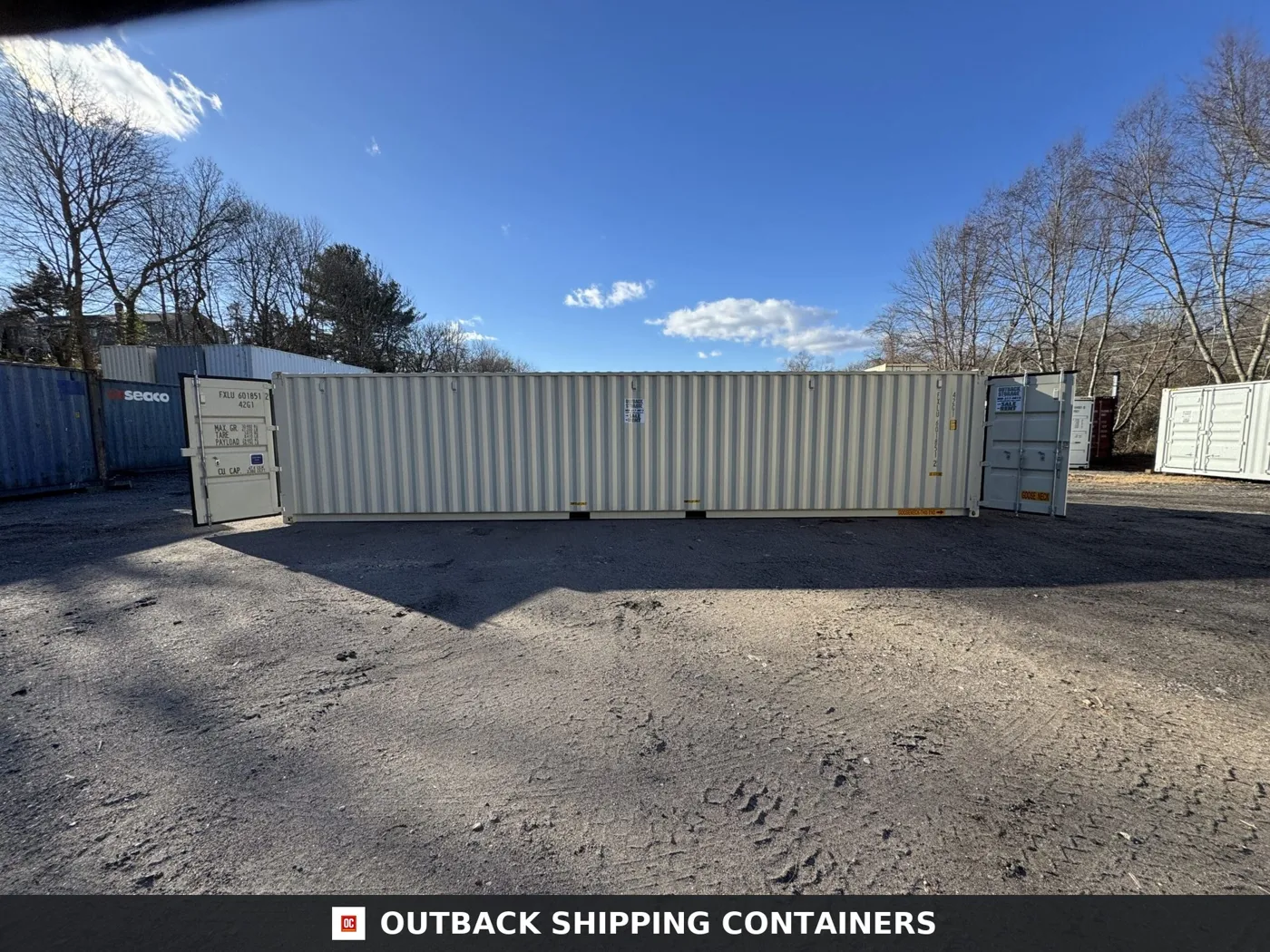
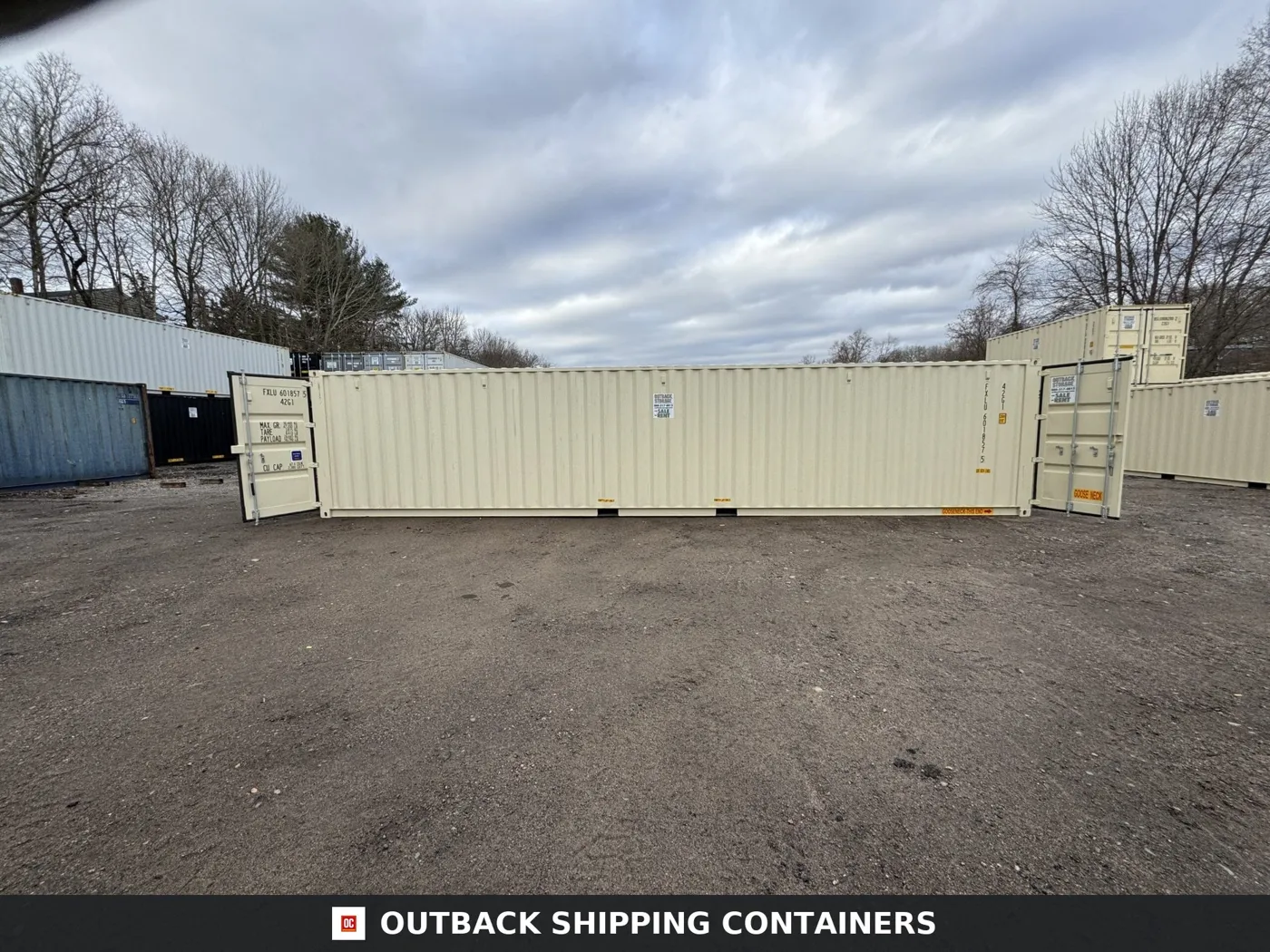
Downtown and the older blocks around Main, Elm, Silver and Water streets are a different job from a flat lot out on Kennedy Memorial Drive. Expect overhead service wires, tree canopy, cars parked tight to the curb and short shared driveways. A 20ft can usually be set off a roll-off or a tilt-bed from the street if the wire height and the parking work out. A 40ft wants a long straight approach and room for the trailer to swing, which in practice means something close to a hundred feet of clear run. Tell us the gate width, the overhead clearance and where a loaded truck can turn around, and we will tell you honestly whether it is a straight drop or whether a 20ft is the smarter buy.
Out past the city line, it becomes a farm-lane question
Much of the container work around Waterville happens outside the city itself — Sidney and Augusta to the south, Oakland and Smithfield to the west, Fairfield and Benton to the north, Winslow and Vassalboro to the east. Those lots are easier in one way and harder in another. There is usually room to set a unit down and turn a truck, but the access is often a gravel lane, a soft shoulder or a grade up off the road.
Mud season is the real constraint. From late March into April a loaded truck and trailer can cut through a farm lane that is dry and solid in July, and once a rig is stuck you are looking at a recovery, not a delivery. If the ground is soft, we would rather move the drop point to hard ground near the road than gamble on the lane. Frost is the other half of it: a container set on a pad that heaves will have doors that bind by February, and that is a site prep problem, not a container problem.
What Waterville buyers use them for
The pattern here is farm and trades storage first. Hay, feed, seed, pallets, tools, skid steer attachments, a welder and a bench — a 20ft takes a season's worth and still fits down a lane a 40ft will not turn into. Contractors working jobs in the city keep a lockup on site or at the yard edge so materials and equipment do not walk. Retail and service businesses along Main Street and Kennedy Memorial Drive use a 10ft or 20ft behind the building for stock and seasonal overflow, because a one-time purchase beats paying rent on a storage unit every month for the rest of the business's life.
Then there is the conversion side. Colby College, Thomas College and the hospital district all sit within a few minutes of the exits, and this is a city where people build rather than rent: a container office for a contractor's yard, an insulated workshop on a rural lot, a sauna room or a small container home on land out in Sidney or Oakland. Those are longer projects with a build schedule attached. Start with the customization process well before you need the unit on site.
Sizes and grades worth comparing
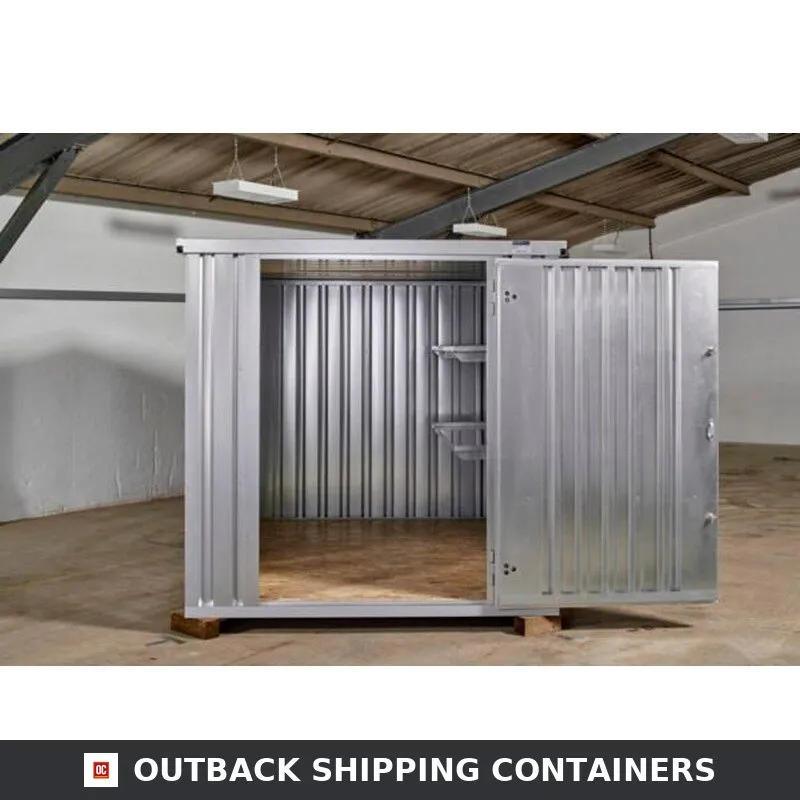
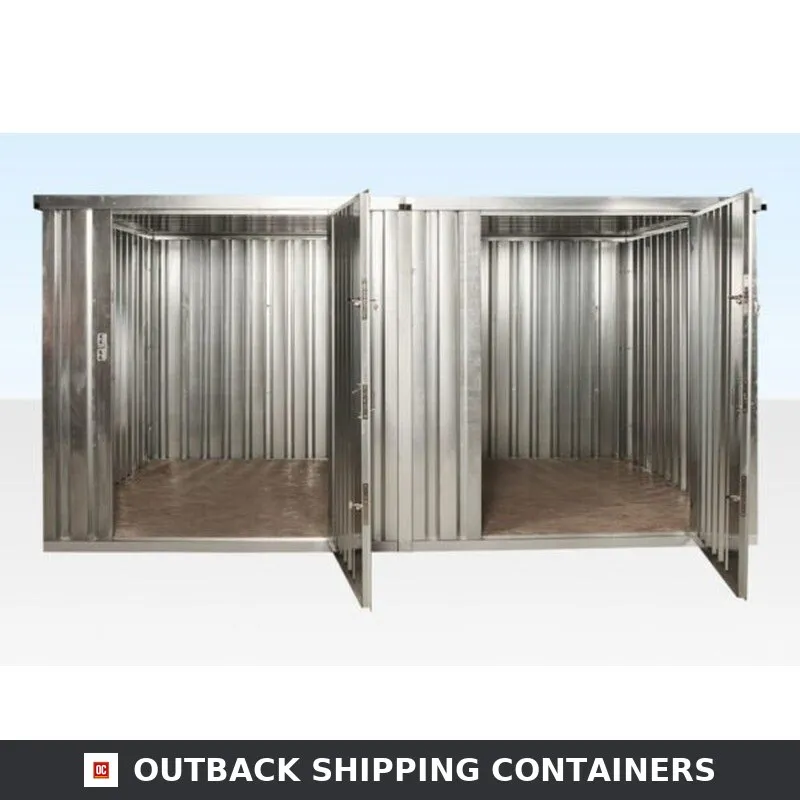
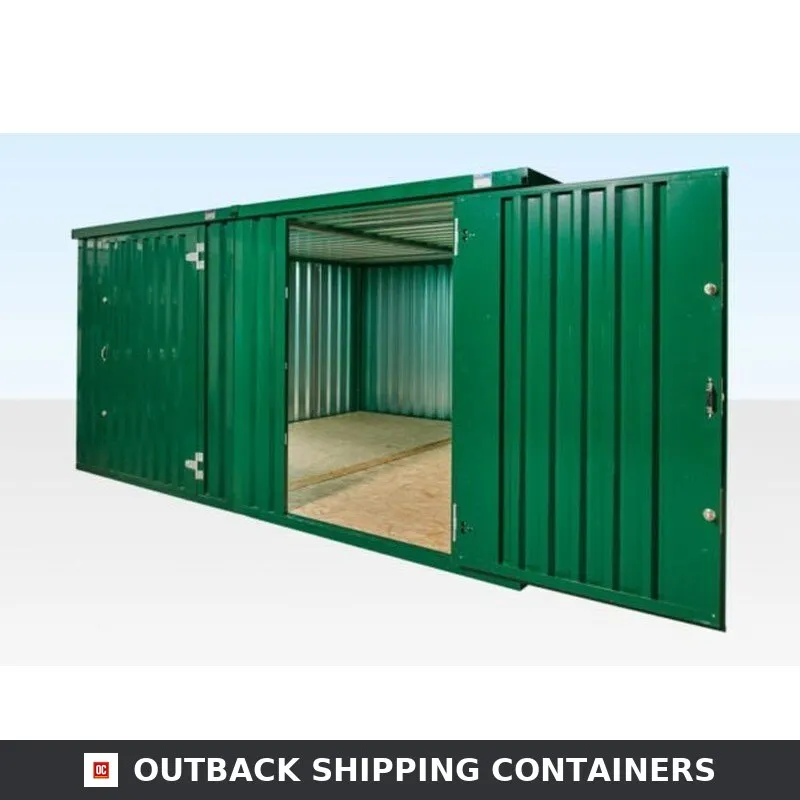
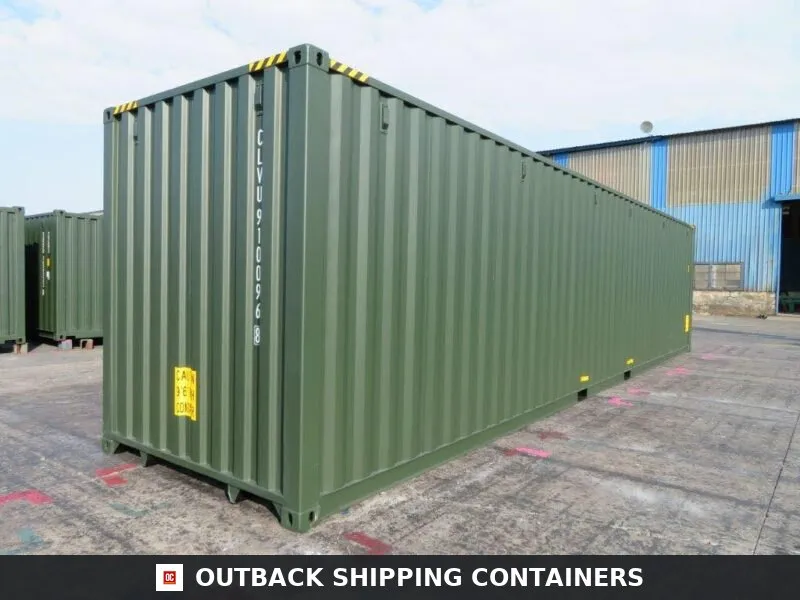
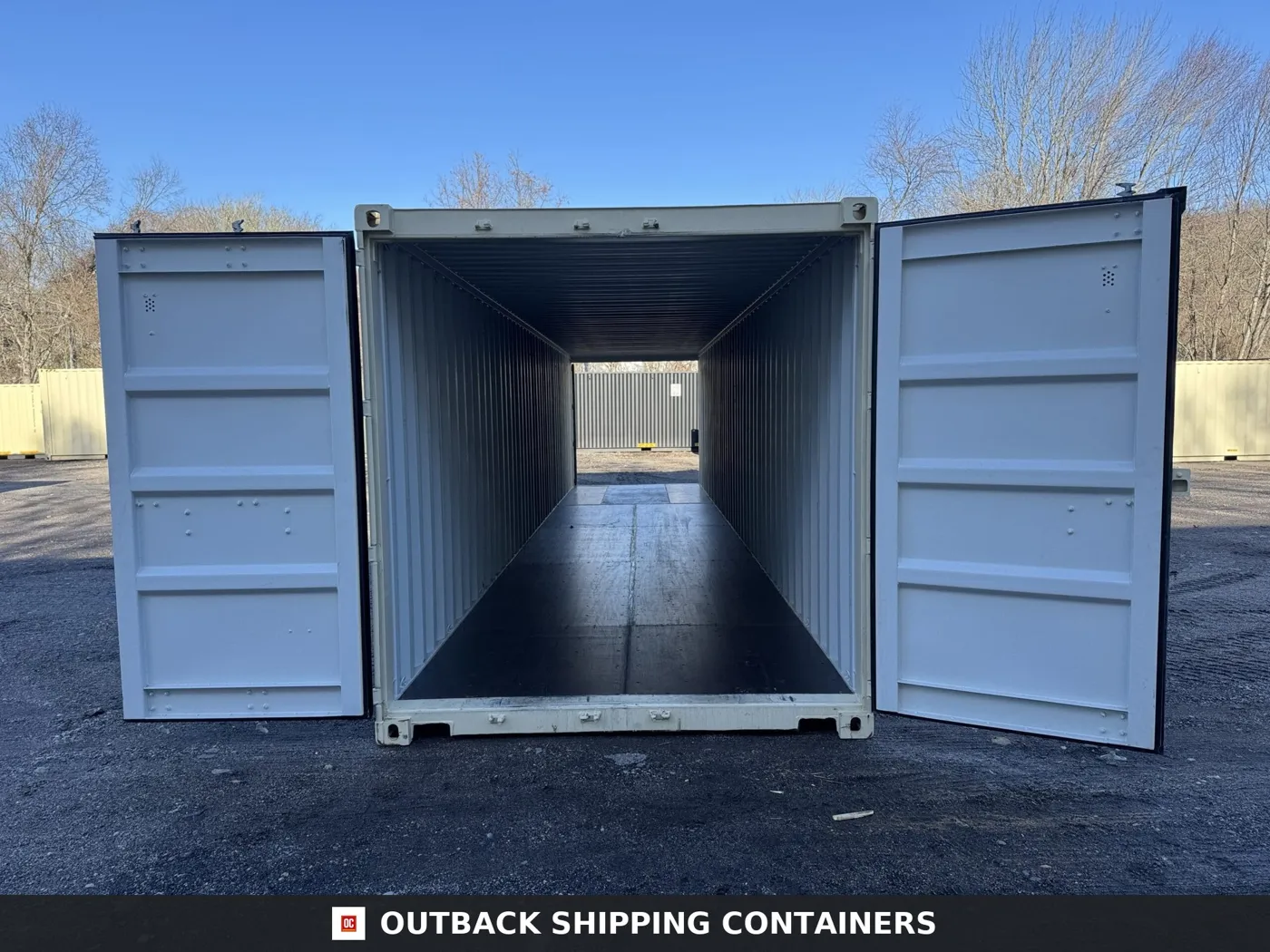
Standard containers come in 10ft, 20ft and 40ft, all 8ft wide. High cubes are the same footprint with about a foot more headroom inside, which matters once you are storing racking or planning to convert. Double door and open side units give you a second opening so you can load from the side or push through end to end instead of working around a single cargo door.
| Unit | What it suits | What to watch |
|---|---|---|
| 10ft | Job site lockup, garden and tool storage, tight city lots | Least floor space per dollar; check the door swing clearance |
| 20ft | Farm and trades storage, most Waterville residential deliveries | The practical default — fits lanes and short approaches a 40ft will not |
| 40ft | Hay, pallets, machinery, shop overflow | Needs a long straight approach and real turning room |
| High cube | Tall racking, later conversion, workshop use | Extra height means extra wind load and a taller trailer |
| Double door / open side | Loading from two ends, drive-in access, awkward footprints | Fewer units in stock at any one time |
| Refrigerated | Farm produce, game, food business cold storage | Needs a power supply sized for the reefer unit |
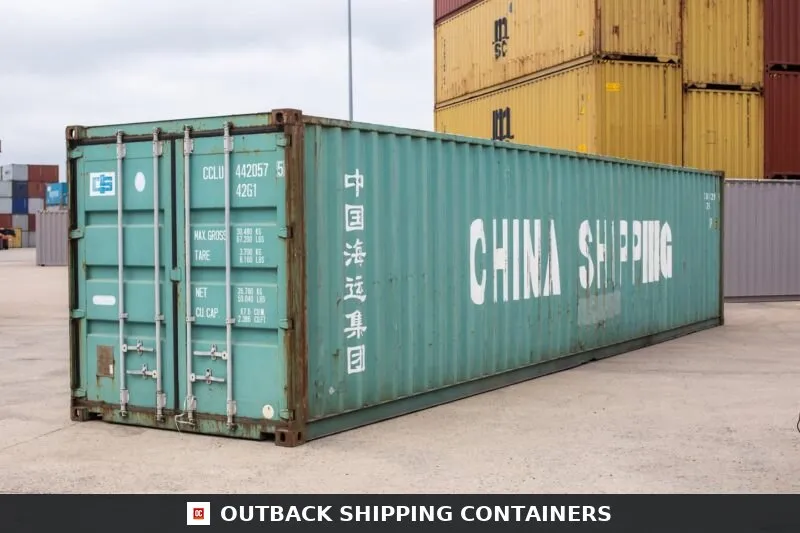
Condition is where most of the price gap between yards sits. New and one-trip units are near-perfect steel with fresh paint and tight seals. Used units are graded on how straight the panels are, how much surface rust they carry and whether they are wind and watertight — a used unit that keeps rain out is a good storage building and costs a good deal less. Unrefurbished units are the roughest and the cheapest, and usually the right call for a construction site or a bark pile where appearance does not matter. Ask what grade a specific unit is before you compare it to another yard's number. The full range is in the shipping container catalogue, and if cold storage is the job, look at refrigerated containers.
Site prep before the truck is booked
A container is heavy, rigid and unforgiving, so the base does the work. Four to six inches of compacted crushed stone over a level, well-drained spot is the standard answer in central Maine, with timber or concrete bearers under the corner castings so the steel floor is not sitting in wet ground. Slope the surface so water runs away from the doors rather than pooling at the threshold, and keep it clear of the door swing on the side you intend to open. Do not bury the vents — a container that cannot breathe will rain condensation on everything inside it, and that is worse in a Maine spring than in a dry climate.
Measure the gate before you order. A standard container is 8ft wide and 8ft 6in tall, and the truck carrying it is wider still. If the fence gate, the driveway mouth or the branch over the lane will not take it, better to find out now than with a unit on the trailer. Our site preparation page walks through the rest.
How the freight gets quoted
We do not publish a delivery number, because the same container costs different amounts to land on a gravel pad in Sidney and on a narrow side street off Main. Send the address, the surface, the gate width and where the truck can turn around; every order is reviewed by a person and the freight is quoted per order after that review. Payment is by bank transfer once the order is confirmed. If anything arrives damaged, claims are accepted within 24 hours of delivery, so walk around the unit before the driver leaves. Details are on the delivery page, and the rest of the service area is listed under locations.